

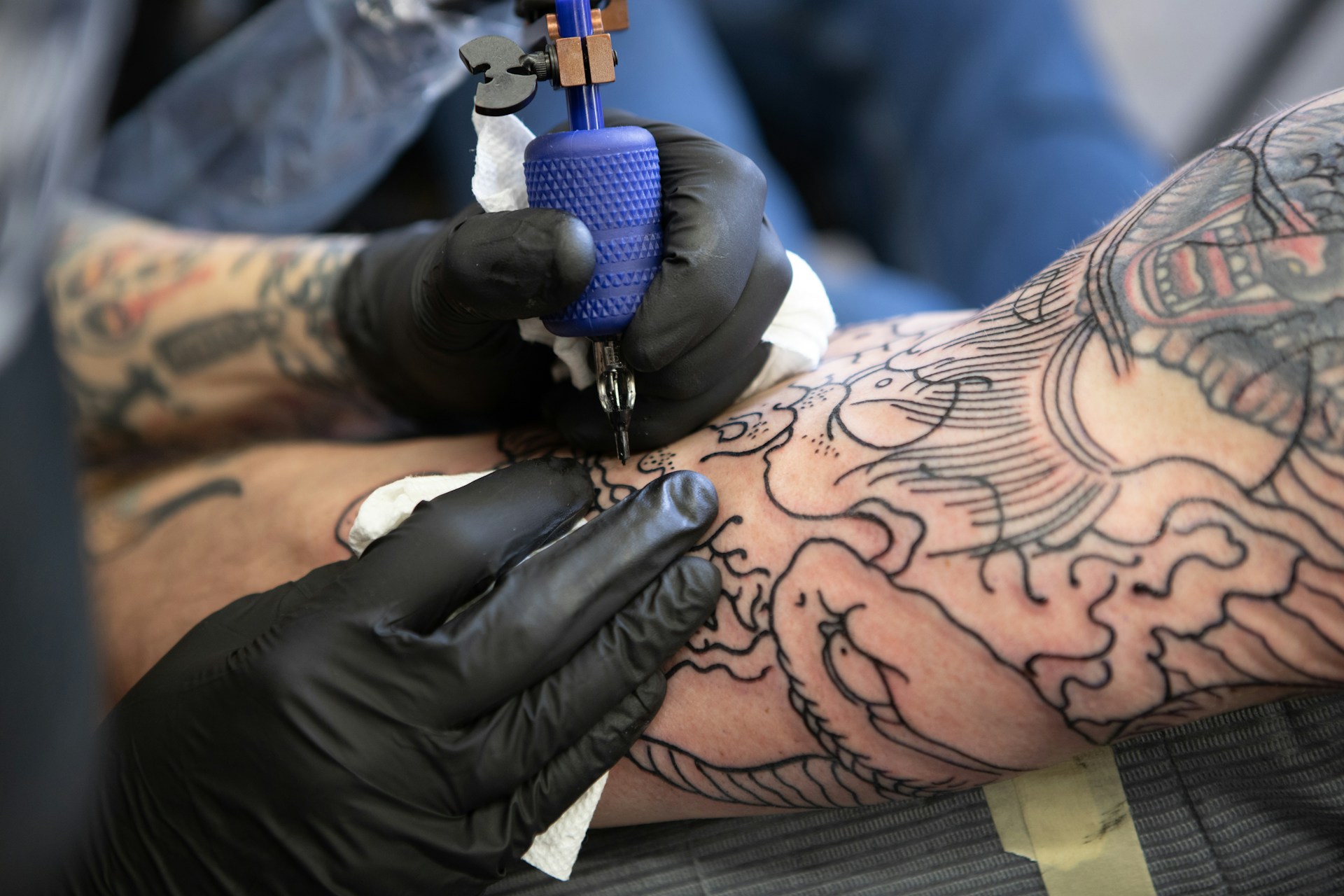
Foto von benjamin lehman auf Unsplash
Tattoo care has pushed men’s skincare beyond basic soap and the occasional splash of moisturizer. Once the initial healing period ends, the condition of the skin continues to affect how clearly a tattoo reads. Dryness can make dark areas look dull, sun exposure can weaken contrast and harsh grooming products may cause irritation.
A simple daily routine can support both the tattoo and the surrounding skin. The key is knowing which habits help, which products suit your skin and when a change in appearance deserves professional attention.
Why Healed Skin Demands Daily Hydration
A healed tattoo may feel like normal skin, but it still benefits from consistent hydration. Dry skin develops a rough surface that scatters light, making lines and shaded areas appear less defined. Moisturized skin has a smoother finish, so the design tends to look clearer and more even.
Start applying a fragrance-free moisturizer after the tattoo has fully healed and your artist’s aftercare period has ended. The tattoo healing guidance from Cleveland Clinic recommends keeping a new tattoo clean and moisturized while avoiding products that may irritate it. During active healing, follow the specific instructions provided by your artist since timing can vary with the size, placement and style of the piece.
Once healed, apply a thin layer of lotion after showering while the skin remains slightly damp. This helps trap water near the surface without leaving a greasy coating. Look for straightforward formulas containing ingredients such as glycerin, ceramides or hyaluronic acid. Fragrance and strong botanical extracts can bother sensitive skin, even when a product is marketed as natural.
Seasonal changes matter too. Cold weather, indoor heating and long hot showers can leave the skin tight or flaky. During winter, you may need a cream instead of a light lotion. In humid weather, a lighter formula may feel more comfortable. If a product causes persistent redness, itching or small bumps, stop using it and consult a dermatologist if the reaction doesn’t settle.
Preserving Contrast in Dark Pigment
Dark pigment depends heavily on contrast. Solid areas look strongest when the surrounding skin is calm, smooth and evenly hydrated. Ashiness, peeling or irritation can create a temporary gray cast across the surface, while repeated sun exposure may contribute to fading over time.
That makes long-term skin condition especially relevant when you’re planning a blackwork tattoo, including custom abstract designs, ornamental linework, botanical work, blackout coverage or engraving-inspired styles. Before an appointment, ask the artist how the scale and placement of a design could affect aging. Fine gaps between dark areas may read differently years later, so experienced artists often account for the way lines and shapes settle into skin.
After healing, protect exposed areas with a broad-spectrum, water-resistant sunscreen labeled SPF 30 or higher. Apply it about 15 minutes before going outdoors and cover the entire tattoo, including its edges. Reapply at least every two hours when you remain outside, as advised in the CDC’s sun safety guidance, and sooner after swimming or heavy sweating.
Clothing adds useful protection. A lightweight long-sleeve shirt can be easier than repeated sunscreen application during a long afternoon outdoors. Fresh tattoos require different care, however. Keep them out of direct sunlight and don’t put sunscreen on broken or actively peeling skin unless your artist or clinician specifically directs you to do so.
Protecting Your Blackwork Tattoo Over Time
Daily habits can have a greater effect on appearance than expensive specialty products. Use lukewarm water in the shower because very hot water can strip surface oils and leave the skin feeling tight. Clean the area gently with your hands and a mild cleanser. Scrubbing tools, rough exfoliants and frequent acid treatments may trigger irritation without making pigment look brighter.
General tattoo aftercare instructions also emphasize watching for changes during healing. Some redness and tenderness can be expected early on, but worsening pain, spreading redness, unusual warmth, pus or fever calls for prompt medical advice. A tattoo artist can answer routine care questions, while signs of infection or an allergic reaction belong with a qualified healthcare professional.
Long after healing, pay attention to raised patches, recurring itchiness or skin changes that extend beyond ordinary dryness. Don’t assume every change comes from the tattoo. Conditions such as eczema, contact dermatitis and follicle irritation can occur on tattooed skin just as they do elsewhere.
Grooming deserves some thought as well. Wait until the skin has completely healed before shaving over it. Use a clean, sharp razor and a fragrance-free shaving product, then moisturize afterward if your skin tolerates it. If close shaving repeatedly causes bumps, an electric trimmer may reduce friction.
Skip aggressive attempts to polish the area. Pigment sits below the outermost layer of skin, so exfoliating harder won’t restore it. Gentle care keeps the surface smooth while reducing the chance of redness that can interfere with visual clarity.
Simple Steps for Long-Term Clarity
A practical routine should be easy enough to follow every day. You don’t need a shelf full of tattoo-specific products. A mild cleanser, a moisturizer suited to your skin and dependable sunscreen cover the main needs for most healed pieces.
Use this basic schedule:
- Morning: Apply fragrance-free moisturizer if the skin feels dry, followed by broad-spectrum SPF 30 or higher on exposed, fully healed areas.
- After exercise: Rinse away sweat and change out of tight, damp clothing that rubs against the tattoo.
- Evening: Clean gently during your shower, pat the skin dry and apply a thin layer of moisturizer.
- Weekly: Check for persistent dryness, irritation, raised areas or noticeable changes in the surrounding skin.
- Seasonally: Adjust lotion thickness and use protective clothing when sun, wind or cold exposure increases.
Product testing can prevent avoidable irritation. Apply a small amount of a new lotion or sunscreen to an untattooed patch of skin for several days before using it across a large design. This won’t predict every possible reaction, but it can reveal obvious sensitivity to fragrance, preservatives or texture.
Photographs can also help you judge gradual changes more accurately. Take a clear image in indirect daylight once or twice a year, using the same angle and distance. Day-to-day lighting often makes pigment appear lighter or darker, so consistent photos provide a more useful comparison. If the tattoo has faded enough to lose key lines or areas of fill, ask the original artist whether a touch-up is appropriate.
Treat the surrounding skin as part of the artwork. A short routine after your shower, plus reliable protection before time outdoors, gives dark lines and solid fields the best surface on which to remain clear.